ALIGN HEALTH INSIGHTS: January 2026
Welcome to the January 2026 edition of our newsletter! Happy New Year! As we step into 2026, healthcare technology is accelerating with specialized AI platforms launching, increased focus on usability and equity, and continued investment in hybrid care models. This issue covers the latest news, breakthrough innovations (including ChatGPT Health and Claude for Healthcare), expert insights, emerging trends, hiring dynamics, and career opportunities. Whether you're reflecting on last year's progress or planning your 2026 priorities, let's explore what's shaping the year ahead.
Key News and Updates
January kicked off with major AI announcements and ongoing regulatory momentum:
OpenAI launched ChatGPT Health (January 7, 2026), creating an encrypted space for users to connect medical records, lab results, and wellness apps (e.g., Apple Health) for personalized insights and medical prep—without replacing professional advice. It also introduced HIPAA-compliant models for clinical workflows, partnering with institutions like UCSF and Boston Children’s Hospital.
Anthropic unveiled Claude for Healthcare (January 12, 2026, at J.P. Morgan Healthcare Conference), offering HIPAA-ready tools for providers, payers, and patients, including secure health record access, prior authorizations, care coordination, and regulatory support via integrations with HealthEx, Function Health, Apple Health, and more.
HHS continues advancing its AI strategy, with emphasis on agentic platforms and ethical deployment.
CMS clarified telehealth reimbursement rules, while new Senate privacy legislation addresses wearables and data security gaps.
These early-year launches signal a competitive push toward secure, patient-empowered AI tools.
Innovations and Breakthroughs
January brought specialized AI health platforms and continued advancements in diagnostics and care delivery:
ChatGPT Health enables pattern analysis from personal health data, helping users prepare for doctor visits and track wellness trends.
Claude for Healthcare supports evidence-based tasks like clinical trial matching, prior authorization automation, and compliance with CMS coverage rules and PubMed integration.
Philips expands AI-powered procedural tools, while IonQ's quantum collaborations with AstraZeneca and NVIDIA accelerate drug discovery simulations.
Wireless 3D-printed implants and brain-computer interfaces (e.g., Neuralink, Precision Neuroscience) gain traction for chronic condition management.
These innovations emphasize secure data use, usability, and integration—core themes for 2026.
Insights and Analysis
Industry reports and early 2026 commentary highlight AI's maturation and usability focus:
AI adoption in healthcare reached 22% in 2025 (spending $1.4B), with healthcare leading enterprise deployment—yet governance and trust remain critical.
Menlo Ventures notes healthcare captured 43% of vertical AI investment in 2025, with ambient documentation as the most adopted use case.
Philips' Future Health Index stresses building trust through transparency and user-centric design—echoing the need for family/provider testing before scaling.
Deloitte and EY predict 2026 will see deeper GenAI penetration for documentation, care gap identification, and hybrid care models.
These insights reinforce that problem-first, user-validated innovation will define success this year.
Emerging Trends for 2026
2026 is shaping up around accessible, equitable, and integrated AI:
Specialized AI platforms (ChatGPT Health, Claude for Healthcare) make generative tools HIPAA-compliant and workflow-ready.
User-centric design becomes non-negotiable—tools must be simple enough for family members or elderly patients to use.
Hybrid care models expand, blending virtual-first approaches with in-person care.
Equity focus grows, with emphasis on addressing social determinants through inclusive design.
Regulatory alignment accelerates, with CMS and FDA supporting secure data sharing and AI transparency.
Organizations should prioritize usability testing, governance frameworks, and partnerships to stay ahead.
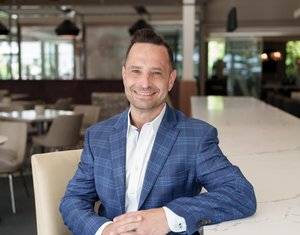
Top Takeaways from Align Health Insights: Episode 10 with Zsolt Kulcsar
In this episode of Align Health Insights, we interview Zsolt Kulcsar, VP of Digital at Emory Health System. We discuss Zsolt's extensive background in telemedicine, the evolution of virtual health, and the impact of technology on chronic care management.
Zsolt shares insights on the future of telehealth, the importance of understanding medical workflows, and the role of social determinants in healthcare equity. The conversation also touches on the challenges of adopting digital health solutions and the skills needed for aspiring professionals in the field.
Insights:
Telemedicine has been evolving for decades, starting from the 1950s.
Virtual care encompasses a wide range of digital health tools.
AI and digital tools can significantly enhance healthcare delivery.
Understanding patient needs and workflows is crucial for digital health solutions.
Remote patient monitoring can prevent hospitalizations for chronic conditions.
Virtual first healthcare models are becoming the norm.
Investors look for real problems and strong teams in healthcare startups.
Social determinants greatly affect access to virtual health services.
Building partnerships is essential for the success of digital health initiatives.
Catch the full episode on YouTube—Episode 11 with Jon Warner drops February 4th!
Hiring Trends in Healthcare Tech
January hiring reflects 2025's momentum with a focus on AI and user-experience skills:
Healthcare drove 69% of US job growth in 2025 (405K+ roles), but policy risks (e.g., potential Medicaid changes) could impact 2026.
Demand surges for AI/ML specialists, UX designers, and hybrid clinical-tech roles.
76% of staffing firms plan increased tech spend (avg. 8%) to support AI workflows and remote tools.
Skills-based hiring reaches 73%, favoring candidates who understand usability and real-world implementation.
Remote and flexible roles remain strong, especially in digital health coordination and compliance.
Q1 2026 is a prime time to recruit talent with both technical depth and patient-centered mindset.
Recent Job Placements by MCZ Align
We’re proud to showcase recent placements that reflect healthcare tech innovation:
VP Business Development - Foundation Health
Director of Business Development- Foundation Health
ML Engineer - Integral
Enterprise Account Executive LLMs - Integral
Open Job Opportunities with MCZ Align
VP Research - Arcadia
SVP Data Products - Arcadia
VP Comercial - Arcadia
Director of Delivery and Operations - Arcadia
VP of Business Development - Foresee Medical
Research Scientist: Remote: Sentra Inc.
Front and Back End Engineers: SF or NYC: Integral Privacy Solutions Inc.
Implementation Engineers: SF or NYC Integral Privacy Solutions
Account Executives: San Fran based: Neon Health Inc.